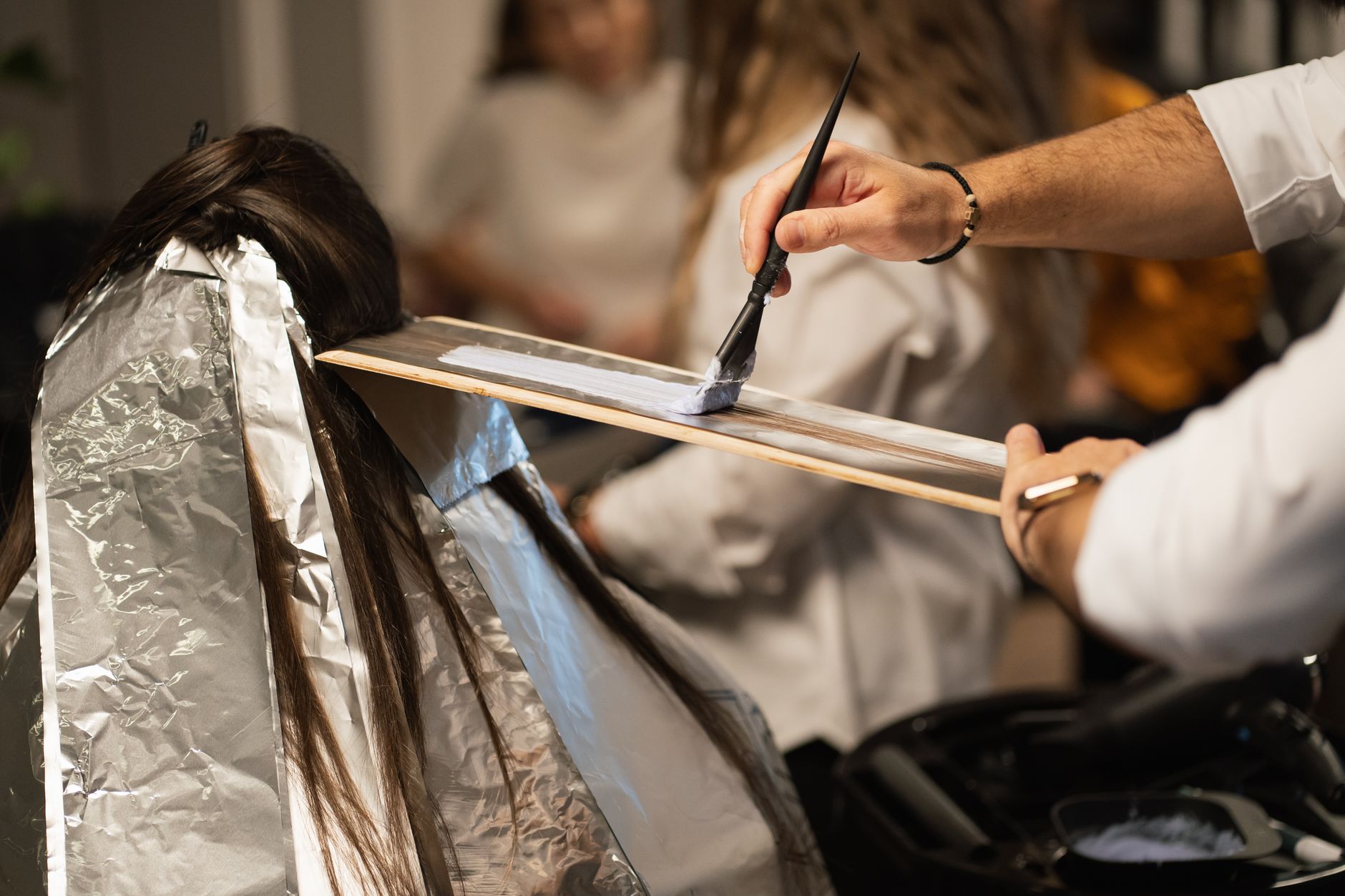
Balayage is generally safe during pregnancy, but with low dosage and in the second or third trimester
By Shubhra Mishra — a mom of two who turned her own confusion during pregnancy into BumpBites, a global mission to make food choices clear, safe, and stress-free for every expecting mother. 💛
Check whether any food is safe during pregnancy with the BumpBites Food Safety Checker.
Quick verdict: ⚠️ Talk to your doctor first. Balayage isn’t outright forbidden, but because it involves chemical exposure, most obstetric guidelines recommend limiting it—especially in the first trimester and opting for low‑odor, low‑ammonia formulas when possible.
It’s 2 a.m., the salon lights are still on, and you’ve just heard the word “balayage.” Your mind races: Is balayage safe during pregnancy? You’re not alone—many expecting parents wonder if that sun‑kissed hair look could harm their baby. The short answer is that the procedure isn’t categorically banned, but there are important timing, ingredient, and frequency considerations you should know.
In this article we’ll break down exactly what “balayage” means, what the major health authorities (ACOG, NHS, FDA) say about chemical hair treatments in pregnancy, how safety changes across each trimester, how often you can safely repeat the process, which brands tend to be the gentlest, and what safer alternatives exist. By the end you’ll have a clear plan—whether that means scheduling a low‑risk session, switching to a natural option, or simply putting the color on hold until after delivery.
Trimester / Stage
Verdict
Notes
First trimester (weeks 1‑13)
⚠️ Talk to your doctor
High sensitivity period; avoid strong chemicals (ammonia, peroxide) if possible.
Second trimester (weeks 14‑27)
✅ Generally safe with low‑odor formulas
Ventilation and patch test recommended; limit to one session.
Third trimester (weeks 28‑40)
✅ Generally safe with low‑ammonia, low‑peroxide dyes
Same precautions as second trimester; consider timing around prenatal visits.
Breastfeeding
✅ Generally safe
Chemical exposure via hair is minimal; avoid ingesting dye.
When you’re pregnant, choosing a low‑odor, low‑ammonia hair dye can reduce inhalation concerns.
What is balayage?
Balayage (French for “sweeping”) is a free‑hand highlighting technique where a colorist paints dye onto the surface of the hair, creating a subtle, sun‑kissed gradient. Unlike foil highlights, the product is applied without foils, so the result looks softer and grows out more naturally. The process typically involves a mixture of ammonia‑based or ammonia‑free permanent dye, a developer (hydrogen peroxide) to open the hair cuticle, and sometimes a “gloss” or “glaze” to lock in shine. Because the dye sits on the surface rather than being fully saturated, many people find balayage less damaging than full‑head bleaching.
Balayage is popular for its low‑maintenance look—roots blend in as hair grows, so you usually need fewer touch‑ups than with traditional highlights. However, the chemicals used (ammonia, peroxide, p‑phenylenediamine or similar aromatic amines) can emit volatile organic compounds (VOCs) that are inhaled during application. For a pregnant person, the primary concerns are potential skin irritation, allergic reactions, and any systemic absorption of these chemicals that could theoretically affect a developing fetus.
Is balayage safe during pregnancy?
Current guidance from the American College of Obstetricians and Gynecologists (ACOG) states that “there is no conclusive evidence that hair dye exposure during pregnancy leads to birth defects,” but the organization recommends minimizing exposure to strong chemicals, especially during the first trimester when organ formation is most vulnerable. The UK’s National Health Service (NHS) echoes this, advising pregnant women to opt for “low‑odor, ammonia‑free” products and to ensure proper ventilation.
The U.S. Food and Drug Administration (FDA) classifies most permanent hair dyes as “generally recognized as safe” for topical use, yet it also notes that occupational exposure (e.g., hairdressers) is linked to higher rates of dermatitis and that pregnant salon workers are advised to use protective gloves and masks. The Centers for Disease Control and Prevention (CDC) does not list hair dye as a teratogen, but it recommends pregnant individuals avoid prolonged inhalation of strong fumes.
In practice, the consensus among obstetricians and dermatologists is that a single, well‑ventilated balayage session using a low‑ammonia, low‑peroxide formula is unlikely to pose a significant risk. The real caution lies in repeated exposure, strong odors, and personal sensitivities—especially if you have a history of allergic reactions to hair products.
Good ventilation reduces inhalation of dye fumes, an important safety step for pregnant clients.
Is balayage safe during the first trimester of pregnancy?
The first trimester is when the embryo’s organs are forming (organogenesis), making it the most sensitive window for any potential teratogens. While there is no solid evidence that the chemicals in standard balayage cause birth defects, most clinicians advise postponing any procedure involving strong fumes or skin‑penetrating chemicals until after the first 12 weeks. If you must have a color boost during this period, choose an ammonia‑free, low‑peroxide “hair gloss” instead of a traditional balayage, and request a well‑ventilated area or a mask.
Can I get a balayage after the second trimester?
After the second trimester (week 14 onward), the risk of chemical exposure drops considerably because organ formation is largely complete. Many obstetricians consider it safe to undergo a single balayage session, provided the salon uses low‑odor, low‑ammonia products and ensures good airflow. It’s still wise to do a patch test first and to keep the session under two hours to limit inhalation.
How many balayage sessions are safe during pregnancy?
There isn’t a strict “maximum number,” but most experts suggest limiting chemical hair‑color procedures to no more than one session per trimester. This guideline balances the desire for color with the principle of “as low as reasonably achievable” (ALARA) for chemical exposure. If you love the look, consider spacing sessions at least 12 weeks apart and always opt for low‑ammonia, low‑peroxide formulas.
What are the safest hair dye brands for pregnant women?
Brands that market “ammonia‑free,” “low‑odor,” and “natural‑ingredient” formulas tend to be the gentlest. Some widely available options that meet these criteria include:
Clairol Natural Instincts – ammonia‑free, low‑peroxide, widely reviewed as pregnancy‑friendly.
Schwarzkopf Color&Co – offers a “no‑ammonia” line with gentle pigments.
John Frieda Precision Foam Colour – foam application reduces spillage and fumes.
Naturtint – plant‑based, certified organic, free of ammonia, PPD, and resorcinol.
Madison Reed – claims low‑odor and low‑ammonia, though it still contains peroxide.
Always read the ingredient list, ask your stylist about ventilation, and consider a patch test before committing to a full balayage.
What are the risks of balayage for pregnant women?
The primary risks are:
Skin irritation or allergic reaction – especially if you have a history of dermatitis; symptoms can include redness, itching, or swelling.
Inhalation of volatile organic compounds (VOCs) – strong odors may cause headaches, nausea, or dizziness, which can be uncomfortable during pregnancy.
Potential systemic absorption – while minimal, a tiny amount of dye can enter the bloodstream; current research has not linked this to fetal harm, but caution is still advised.
Stress or anxiety – prolonged salon visits can increase cortisol levels; a relaxed environment helps mitigate this.
Are there alternative hair coloring methods safe for pregnancy?
Yes. If you want color without the chemical exposure, consider these pregnancy‑friendly options:
Henna hair color – a natural plant pigment that coats the hair shaft without peroxide.
Temporary hair chalk – washes out after a few shampoos, no chemical reaction.
Hair mascara – a quick, non‑permanent stain for a pop of color.
Root touch‑up spray (non‑chemical) – masks gray roots without dye.
Glossing treatment without ammonia – adds shine and a subtle tint.
Clear hair gloss – enhances sheen without any pigment.
Semi‑permanent pastel hair spray – low‑intensity color that fades quickly.
Glitter hair spray – pure visual effect, no dye.
Clip‑in hair extensions – instant color change without any chemical exposure.
Does the type of balayage (organic vs traditional) affect safety?
“Organic” balayage typically refers to formulas that replace synthetic ammonia and harsh preservatives with plant‑derived surfactants and milder pigments. While these versions reduce VOC emissions and skin‑irritant potential, they still contain peroxide, which opens the hair cuticle. The safety difference is modest: organic formulas are gentler on the scalp and produce less odor, but the overall recommendation to limit exposure in early pregnancy remains the same.
Balayage and pregnancy: should I avoid it if I have a history of allergies?
If you’ve previously reacted to hair dyes (e.g., contact dermatitis, hives), it’s wise to avoid traditional balayage altogether during pregnancy. Even low‑ammonia products can trigger a reaction, and pregnancy can sometimes heighten skin sensitivity. Discuss your allergy history with your obstetrician and consider a hypoallergenic alternative like henna or a clear hair gloss.
Safe dosage / amount / brands
Balayage isn’t measured in milligrams like a medication; instead, safety depends on the number of sessions and the chemical strength of the product. Here are practical guidelines:
Parameter
Recommended limit
Notes
Sessions per trimester
1
Space sessions at least 12 weeks apart.
Product type
Low‑ammonia, low‑peroxide (< 6 % peroxide)
Check label for “ammonia‑free” and “low‑odor.”
Ventilation
Well‑ventilated room or mask
Ask the salon to open windows or use an air purifier.
Patch test
24 hours before full application
Helps detect allergic reactions early.
When selecting a brand, look for certifications such as “EU Ecocert” or “US EPA Safer Choice.” Avoid products that list P‑phenylenediamine (PPD), resorcinol, or ammonia as primary ingredients if you’re concerned about irritation.
Side effects and risks
Common, non‑dangerous effects include mild scalp itching, temporary hair dryness, or a brief headache from strong odors. These usually resolve within a day and can be soothed with a gentle conditioner.
Potentially serious concerns are rare but include:
Severe allergic reaction (urticaria, swelling, difficulty breathing) – requires immediate medical attention.
Persistent scalp irritation leading to infection – contact your provider if redness lasts more than 48 hours.
Fainting or dizziness from inhaling fumes – sit down, get fresh air, and inform your doctor.
If you notice any of these red‑flag symptoms, stop the treatment and call your obstetrician or seek urgent care.
Safer alternatives
Henna hair color – natural, no peroxide, gentle on the scalp.
Clip‑in hair extensions – instant color change, no chemicals.
Related items — safety at a glance
Item
Verdict
One‑line note
Ombre
✅ Generally safe with low‑ammonia dyes
Similar exposure to traditional highlights.
Highlights
✅ Generally safe
Use low‑odor, low‑peroxide products.
Lowlights
✅ Generally safe
Same precautions as highlights.
Foil highlights
⚠️ Talk to your doctor
Foils can trap fumes; ensure ventilation.
Sombre
✅ Generally safe
Soft transition, less chemical load.
Color melt
⚠️ Talk to your doctor
Often uses higher peroxide levels.
Gloss treatment
✅ Generally safe
Low‑ammonia, primarily adds shine.
Hair gloss
✅ Generally safe
Usually pigment‑free, minimal exposure.
Hair bleaching
❌ Best avoided
High peroxide and ammonia levels.
Balayage root smudge
✅ Generally safe with gentle formulas
Focuses on surface; lower chemical uptake.
Myth vs. fact
Myth: “All hair dyes are dangerous for the baby.”
Fact: Most topical hair dyes are classified as low‑risk; the main concern is inhalation of strong fumes, especially in early pregnancy.
Myth: “If I use a ‘natural’ brand, there’s no risk at all.”
Fact: Even natural‑ingredient dyes contain peroxide, which can release VOCs; ventilation and patch testing remain important.
Myth: “One quick balayage session will definitely harm my fetus.”
Fact: A single, well‑ventilated session with low‑ammonia dye is unlikely to cause harm, though caution is still advised.
Key takeaways
Balayage isn’t outright banned, but limit sessions—ideally one per trimester.
Choose low‑ammonia, low‑peroxide, low‑odor formulas and ensure good salon ventilation.
If you have a history of dye allergies, opt for henna or a clear gloss instead.
First‑trimester exposure should be avoided unless you use a gentle, ammonia‑free gloss.
Consult your obstetrician before any chemical hair treatment, especially if you experience any skin reaction.
Frequently asked questions
Can I get a balayage while pregnant?
Yes, you can, but most experts recommend waiting until after the first trimester and choosing a low‑ammonia, low‑odor product with proper ventilation.
Is it safe to dye hair during pregnancy?
In general, hair dye is considered low‑risk, especially after the first trimester; however, it’s best to use ammonia‑free formulas and limit exposure.
What hair coloring options are safe for pregnant women?
Safer options include henna, plant‑based dyes like Naturtint, temporary hair chalk, hair mascara, and clear gloss treatments that contain no peroxide.
Does hair dye affect the baby?
Current evidence shows no direct link between topical hair dye and fetal harm, but inhaling strong fumes or having an allergic reaction could cause maternal discomfort, which indirectly affects the baby.
How many times can I color my hair during pregnancy?
Most clinicians advise no more than one full‑head or balayage session per trimester to keep chemical exposure low.
Are natural hair dyes safer during pregnancy?
Natural dyes reduce the risk of harsh chemicals but still contain peroxide; they are safer for the scalp but still require ventilation and a patch test.
What are the risks of chemical hair treatments while pregnant?
Risks include skin irritation, allergic reactions, and inhalation of volatile organic compounds, which can cause headaches or nausea.
Can I use at‑home hair dye while pregnant?
At‑home dye is permissible if you choose an ammonia‑free, low‑peroxide product, work in a well‑ventilated area, and perform a patch test first.
When to call your doctor
If you experience any of the following after a balayage session, contact your obstetrician or seek urgent care:
Severe swelling, hives, or difficulty breathing (possible allergic reaction).
Persistent scalp redness or pus that doesn’t improve within 48 hours.
Sudden, intense headache or dizziness that doesn’t resolve with fresh air.
Fainting, vision changes, or any symptom that feels out of the ordinary for you.
These guidelines are informational only and do not replace personalized medical advice. Always discuss any hair‑coloring plans with your healthcare provider.
References
American College of Obstetricians and Gynecologists. “Guidelines for Cosmetic Procedures During Pregnancy.” ACOG Committee Opinion, 2022.
National Health Service (NHS). “Hair dye and pregnancy.” NHS.uk, updated 2023.
U.S. Food and Drug Administration (FDA). “Hair Coloring Products.” FDA Consumer Health Information, 2021.
Centers for Disease Control and Prevention (CDC). “Pregnancy and Chemical Exposures.” CDC Fact Sheet, 2022.
Mayo Clinic. “Hair Dye Safety for Pregnant Women.” MayoClinic.org, 2023.
World Health Organization (WHO). “Guidelines for Occupational Exposure to Volatile Organic Compounds.” WHO Publication, 2020.
Not sure about the label on Is Balayage Safe During Pregnancy products?
Snap the ingredients list (or paste it, or scan the barcode) and SafeFilter checks every ingredient against your stage of pregnancy — flagging what to avoid, what needs care, and what's fine.
When Shubhra Mishra was expecting her first child in 2016, she was overwhelmed by conflicting food advice — one site said yes, another said never. By the time her second baby arrived in 2019, she realized millions of mothers face the same confusion.
That sparked a five-year journey through clinical nutrition papers, cultural diets, and expert conversations — all leading to BumpBites: a calm, compassionate space where science meets everyday motherhood.
Her long-term vision is to build a global community ensuring safe, supported, and free deliveriesfor every mother — because no woman should face pregnancy alone or uninformed. 🌿
🌍 Stand with mothers, shape safer guidance
Join a small circle of experts who review BumpBites articles so expecting parents everywhere can decide with confidence.