
Starting Solids: The Complete Weaning Guide
When and how to start solids, purées vs baby-led weaning, first foods, the allergen rules, foods to avoid, and how to wean safely while keeping milk as the main drink.
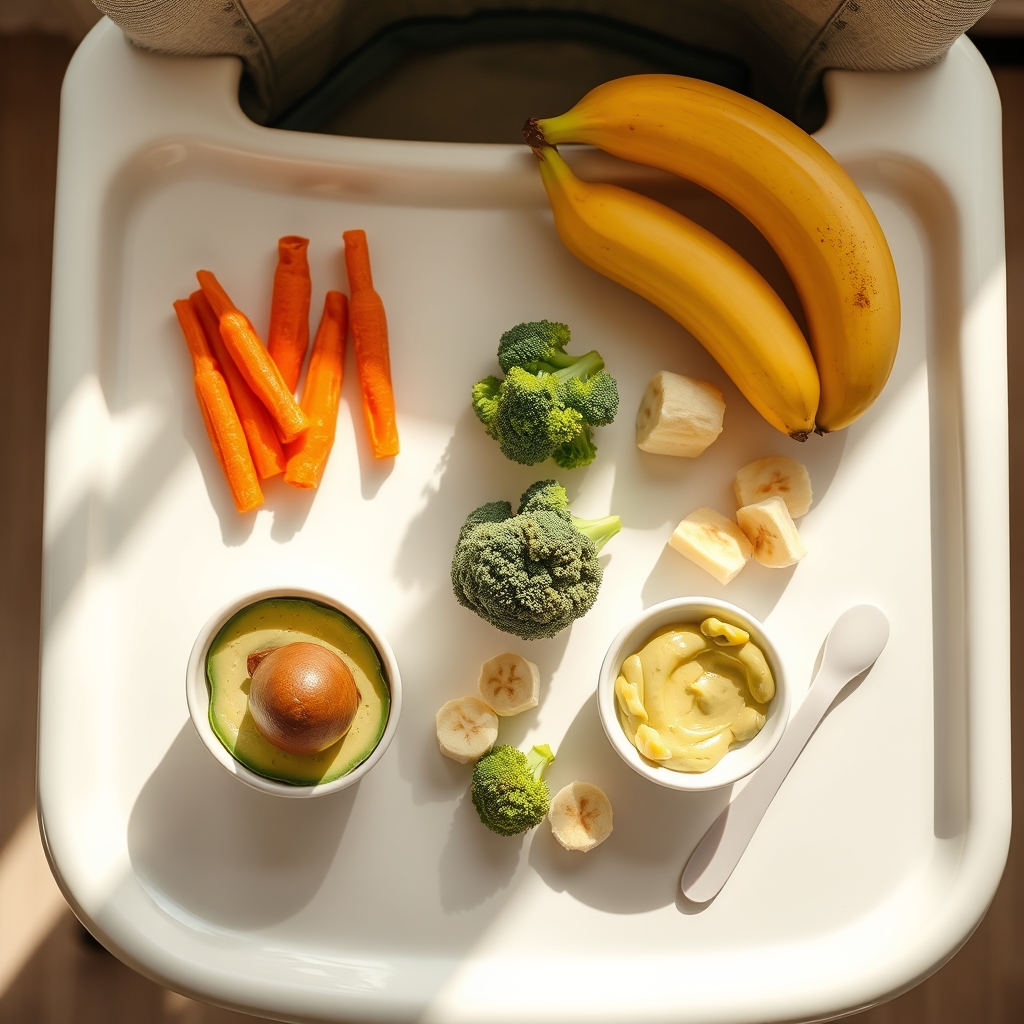
In a nutshell
- Start at around 6 months — when your baby can sit up with support, has good head control, can coordinate hand-to-mouth, and no longer pushes food out reflexively.
- Both purée-led (spoon-feeding) and baby-led weaning (soft finger foods) are fine — many families mix the two.
- Milk (breast or formula) stays the main source of nutrition until 12 months; early solids are about practice, taste and texture.
- Introduce the common allergens (egg, peanut, dairy, gluten, fish, etc.) from ~6 months, one at a time — early introduction can reduce allergy risk.
- Avoid: added salt and sugar, honey (under 1), whole nuts and other choking hazards, and unpasteurised/low-mercury-exceeding foods.
When is my baby ready for solids?
Guidelines recommend starting at around 6 months — not before 17 weeks under any circumstances. Crucially, readiness is about development, not just age. Look for all three signs together:
- They can stay in a sitting position and hold their head steady.
- They can coordinate eyes, hands and mouth — looking at food, picking it up and bringing it to the mouth.
- They can swallow food rather than pushing it back out (the tongue-thrust reflex has faded).
Purées vs baby-led weaning (you can do both)
Purée / spoon-led
Start with smooth purées, then progress to mashed and lumpier textures and finger foods. Easy to gauge intake; just don't get stuck on smooth purées too long — move to lumps and finger foods by ~7-9 months to build chewing skills.
Baby-led weaning (BLW)
Offer soft, graspable finger foods from the start and let the baby self-feed. Encourages chewing and independence and can be less faffy. Cut food to minimise choking risk (see below) and always supervise.
First foods + how to progress
- Great firsts: soft-cooked vegetable sticks (carrot, broccoli, sweet potato), ripe soft fruit (banana, avocado, soft pear), and iron-rich foods (well-cooked meat, lentils, iron-fortified cereal).
- Offer a wide variety of tastes and textures — including bitter veg — to broaden acceptance. It can take 8-10+ tries for a baby to accept a new food.
- Iron matters: at 6 months a baby's iron stores start to run low, so include iron-rich foods regularly.
- Texture progression: smooth → mashed/lumpy → soft finger foods → chopped family food (no added salt) by around 12 months.
- Offer water in an open or free-flow cup with meals; milk feeds continue around solids.
Allergens — the new rules
Current advice is to introduce the common allergenic foods from around 6 months, alongside other foods — delaying them does not prevent allergy and may increase risk. Introduce one new allergen at a time, in a small amount, ideally earlier in the day so you can watch for any reaction.
- The common allergens to introduce: cow's milk (in cooking/dairy like yogurt), egg (well-cooked first), peanut (as smooth peanut butter/thinned — never whole nuts), tree nuts (as nut butters), gluten (wheat), soya, fish, shellfish, and sesame.
- Once a food is tolerated, keep it in the diet regularly to maintain tolerance.
- If your baby has severe eczema or a known food allergy, talk to your GP/health visitor before introducing peanut and egg — they may advise a tailored approach.
Foods to avoid + choking safety
Avoid under 12 months
- Salt (don't add any; avoid salty foods like stock cubes, bacon, crisps) — babies' kidneys can't handle it.
- Sugar and sugary foods/drinks (tooth decay + taste preferences).
- Honey — until 12 months, due to the risk of infant botulism.
- Whole nuts and hard foods (choking), and unpasteurised cheeses; limit high-mercury fish (shark, swordfish, marlin).
- Rice drinks as a main milk, and large amounts of low-calorie/high-fibre 'diet' foods.
Choking safety
- Always supervise; sit the baby upright, never feed in a car seat or while reclined.
- Cut round foods lengthways — grapes, cherry tomatoes, large blueberries — into quarters.
- Remove stones, pips and hard skins; cook hard veg/fruit until soft; cut foods to finger-size strips for self-feeding.
- Learn baby choking first aid — knowing back blows and the difference between gagging (normal, noisy) and choking (silent, distressed) is invaluable.
Frequently asked questions
When should I start my baby on solids?
Around 6 months, and never before 17 weeks. Readiness is about development, not just age: your baby can sit with support and hold their head steady, coordinate hand-to-mouth, and swallow food rather than push it out.
Is baby-led weaning or purées better?
Neither is 'better' — both are safe and effective, and most families combine them. Purées let you gauge intake; baby-led weaning builds chewing and independence. Follow your baby and keep mealtimes relaxed.
When and how do I introduce allergens?
From around 6 months, introduce the common allergens (egg, peanut as smooth butter, dairy, gluten, fish, sesame, etc.) one at a time in small amounts. Early introduction can reduce allergy risk. If your baby has severe eczema or a known allergy, ask your GP first.
What foods should babies avoid?
No added salt or sugar, no honey under 12 months, no whole nuts or hard choking-hazard foods, no unpasteurised cheeses, and limit high-mercury fish. Keep milk (breast or formula) as the main drink until 1.
How do I reduce the choking risk?
Always supervise, sit the baby upright, cut round foods like grapes lengthways into quarters, remove stones and hard skins, cook hard foods soft, and learn infant choking first aid. Gagging is normal and noisy; choking is silent and distressing.
Should milk feeds stop when we start solids?
No — breast or formula milk stays the main source of nutrition until 12 months. Early solids are about practice with taste and texture, not replacing milk.
My baby keeps refusing food — is that normal?
Very. It can take 8-10 or more exposures for a baby to accept a new food. Keep offering without pressure, eat together, and stay relaxed — appetite and acceptance vary day to day.
Sources
More guides
Baby Milestones: Month-by-Month Development (0-12 Months)
What to expect in your baby's first year — smiling, rolling, sitting, crawling, first words and steps — plus the developmental checks and when to raise a concern.
Read
Newborn Care: Your Complete First 6 Weeks Guide
Feeding, nappies, the umbilical cord, bathing, soothing a crying baby, and the health checks and red flags every new parent needs in the fourth trimester.
Read
The Complete Breastfeeding Guide: Latch, Supply & Problems
How to get a good latch, build and protect your milk supply, solve the common problems (pain, engorgement, mastitis), and know your baby's getting enough.
Read
Educational only — not medical advice. Always consult your midwife, GP or paediatrician for personalised guidance. Medical disclaimer.