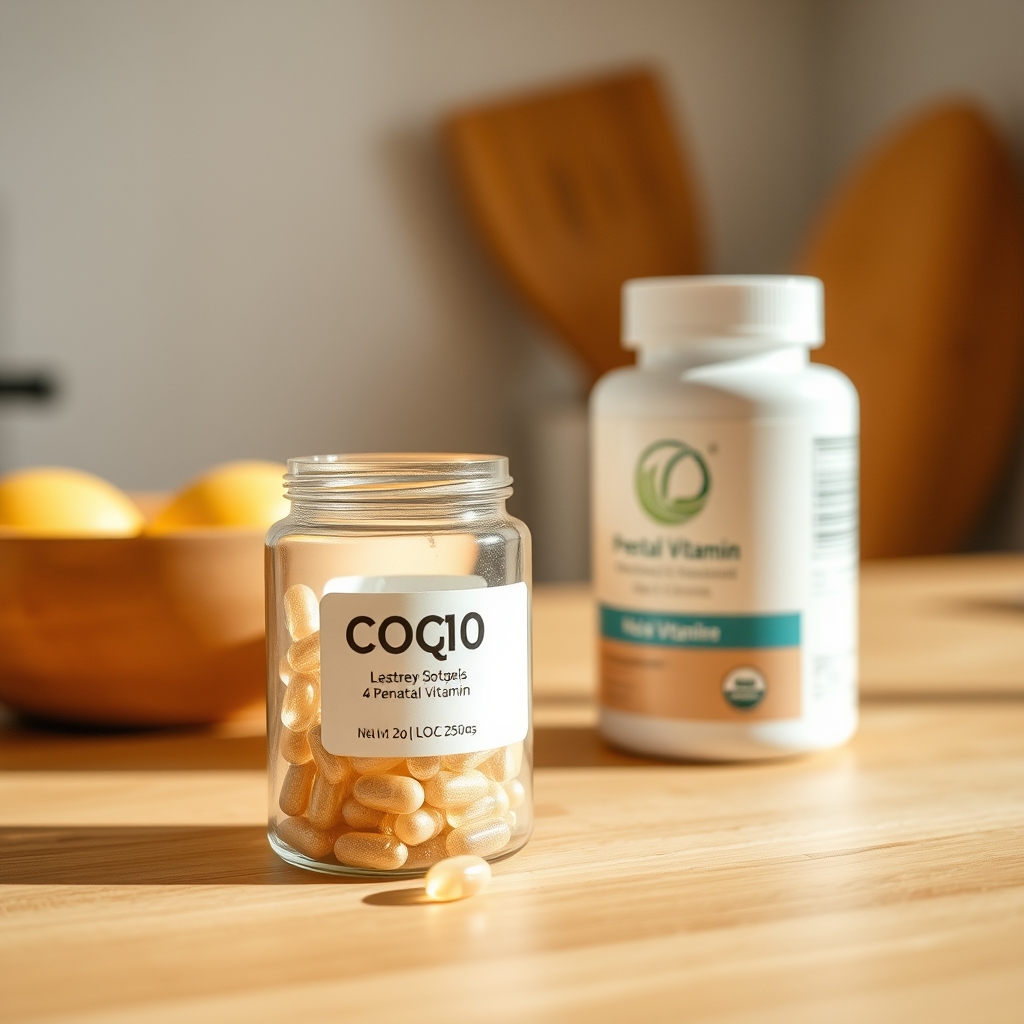
Coq10 is safe during pregnancy, with a recommended dosage of 30-100mg, especially in the second and third trimesters
By Shubhra Mishra — a mom of two who turned her own confusion during pregnancy into BumpBites, a global mission to make food choices clear, safe, and stress-free for every expecting mother. 💛
Check whether any food is safe during pregnancy with the BumpBites Food Safety Checker.
Download the Complete Pregnancy Food Guide (10,000 Foods) 📘
Instant PDF download • No spam • Trusted by thousands of moms
💡 Your email is 100% safe — no spam ever.
Quick verdict: ⚠️ Safe with limits. CoQ10 appears to be low‑risk for most pregnant people when taken at typical supplemental doses, but it’s best to discuss any use with your provider, especially in the first trimester.
It’s 2 a.m., the kitchen light is on, and you’ve just opened a bottle of CoQ10 wondering, “Is CoQ10 safe for pregnancy?” You might have already taken the supplement before you knew you were expecting, or you may be considering it to boost energy or support a healthy pregnancy. The short answer is that most clinicians consider CoQ10 to be low‑risk when used at standard doses, but the evidence isn’t as robust as it is for prenatal vitamins. In this article we’ll break down the current guidance, look at trimester‑specific considerations, discuss recommended dosages, point out potential side effects, and suggest safer alternatives you can feel confident about.
We’ll also compare popular CoQ10 brands, explore how CoQ10 might interact with conditions like preeclampsia, and give you a quick‑reference table so you can see the safety snapshot at a glance. By the end, you’ll know whether you can keep the supplement on your nightstand, what amount is reasonable, and exactly when to call your doctor.
Because every pregnancy is unique, we’ll highlight the moments when a conversation with your obstetrician is especially important—whether you’re in the first weeks of pregnancy, managing a chronic condition, or simply looking for the most evidence‑based way to support your health.
Keep supplements organized and out of reach of children—especially if you’re unsure about safety.
Stage
Verdict
Notes
First trimester
⚠️ Safe with limits
Limited data; discuss with provider; avoid high doses (>300 mg/day)
Second trimester
✅ Generally safe
Typical supplemental doses (100–200 mg/day) considered low risk
Third trimester
✅ Generally safe
Same dosing as 2nd trimester; monitor for any unusual symptoms
Breastfeeding
✅ Generally safe
Limited data, but most lactation experts do not see a problem at standard doses
What is CoQ10 and how does it work?
Coenzyme Q10 (CoQ10) is a naturally occurring antioxidant found in every cell of the body. It plays a central role in the production of adenosine‑triphosphate (ATP), the molecule that supplies energy for cellular functions. As we age, or during periods of high metabolic demand, our bodies may produce less CoQ10, which is why many people turn to supplements. In pregnancy, the growing fetus and placenta increase the mother’s energy needs, and some clinicians hypothesize that extra CoQ10 could help support mitochondrial function and reduce oxidative stress.
CoQ10 comes in two primary forms: ubiquinone (the oxidized version) and ubiquinol (the reduced, more bioavailable version). Supplements are sold as softgel capsules, chewable gummies, liquid drops, and even as part of “heart‑health” blends. Because CoQ10 is fat‑soluble, it is best absorbed when taken with a meal that contains some dietary fat.
While CoQ10 is not a required nutrient like folic acid, it is widely marketed for energy, skin health, and cardiovascular support. Understanding its role helps you decide whether the supplement is truly needed during pregnancy or if other nutrients might offer similar benefits with a longer safety track record.
For those who prefer food‑first approaches, small amounts of CoQ10 can be found in organ meats (especially liver), beef, sardines, and peanuts. However, dietary intake is usually far below the doses used in supplement studies, which is why many people choose the supplemental route to achieve a therapeutic level.
Is CoQ10 safe during pregnancy?
Current guidance from major health bodies suggests that CoQ10 is low‑risk when taken at typical supplemental doses, but the data are not as extensive as for prenatal vitamins. The American College of Obstetricians and Gynecologists (ACOG) notes that CoQ10 “has not been shown to be teratogenic,” and many obstetricians consider it safe if a pregnant patient chooses to use it, especially after the first 12 weeks. The UK’s National Health Service (NHS) similarly states that “there is no strong evidence of harm,” but advises that any supplement should be discussed with a health professional.
The U.S. Food and Drug Administration (FDA) has not approved CoQ10 for any specific indication, including pregnancy. This means it is regulated as a dietary supplement, not a drug, and manufacturers are not required to prove safety in pregnant populations before marketing. Nevertheless, several small studies have examined CoQ10’s effect on preeclampsia and gestational hypertension, finding a possible reduction in blood pressure when 200 mg daily is used under medical supervision. No major teratogenic effects have been reported.
Because the evidence is limited, most clinicians advise caution during the first trimester—the period of organogenesis when the embryo is most vulnerable to teratogens. After the first 12 weeks, many obstetricians feel comfortable allowing CoQ10 at standard doses (100–200 mg/day) if the mother feels it helps with fatigue or other symptoms. In short, CoQ10 appears to be safe for most pregnant people when used responsibly, but the safest route is to have a conversation with your provider.
When weighing the decision, consider the overall risk‑benefit profile. If you have a condition that could benefit from CoQ10—such as preeclampsia or a known mitochondrial disorder—your provider may be more inclined to recommend it. Conversely, if you are using it solely for a perceived energy boost, a well‑balanced diet and adequate rest may be sufficient alternatives.
Consider a balanced supplement routine that includes proven nutrients like folic acid alongside any optional CoQ10.
Is CoQ10 safe to take during the first trimester of pregnancy?
The first trimester (weeks 1–12) is when the embryo’s major organs form. Because research on CoQ10 in this window is sparse, many clinicians recommend a cautious approach. The ACOG practice bulletin on dietary supplements advises that “while no teratogenicity has been demonstrated, the lack of robust data warrants a discussion with the obstetrician before initiating any new supplement.” If you already took a low dose (e.g., 30–50 mg) before learning you were pregnant, the risk is likely minimal, but you should still inform your provider.
For those who decide to continue, the consensus is to keep the dose at or below 100 mg per day during the first trimester and to take it with food to improve absorption. Some providers may suggest waiting until after the 12‑week mark, especially if you have a history of miscarriage or are concerned about any potential unknown risks.
What is the recommended CoQ10 dosage for pregnant women?
Most clinical studies that have examined CoQ10 in pregnancy used doses ranging from 100 mg to 200 mg per day, usually divided into two doses taken with meals. The ACOG and NHS both suggest that “standard supplemental amounts (100–200 mg/day) appear safe,” but they also emphasize that individual needs can vary. If you are taking a prenatal vitamin that already includes CoQ10, you may not need an additional supplement.
For most pregnant people, a daily dose of 100 mg is a reasonable starting point. If you have a specific condition such as preeclampsia, your provider may increase the dose to 200 mg under close monitoring. Doses above 300 mg per day have not been well studied in pregnancy and should be avoided unless a specialist recommends them for a particular medical reason.
Can CoQ10 help with gestational diabetes?
Gestational diabetes (GDM) is characterized by elevated blood‑glucose levels that develop during pregnancy. A handful of early‑phase trials have explored CoQ10’s potential to improve insulin sensitivity because of its role in mitochondrial function. The data are inconclusive; one small 2018 study reported modest reductions in fasting glucose, while a larger 2021 trial found no statistically significant effect. As of now, major guidelines from ACOG and NICE do not list CoQ10 as a recommended therapy for GDM.
If you have GDM, focus on evidence‑based interventions such as dietary counseling, glucose monitoring, and, when needed, insulin therapy. Discuss any supplement—CoQ10 included—with your endocrinologist or obstetrician to ensure it won’t interfere with your glucose‑management plan.
Is CoQ10 safe for women with thyroid disorders?
Thyroid hormones are crucial for fetal brain development, and many pregnant people with hypothyroidism take levothyroxine. CoQ10 does not appear to interact directly with thyroid medication, but because it can influence cellular metabolism, some clinicians advise monitoring thyroid‑stimulating hormone (TSH) levels after starting a new supplement. The American Thyroid Association (ATA) recommends that any supplement be added only after discussing it with the treating physician.
In practice, most women with well‑controlled thyroid disease can safely use standard CoQ10 doses (100 mg/day). Still, a brief check‑in with your endocrinologist after a few weeks can confirm that your thyroid regimen remains stable.
What are safe alternatives to CoQ10 for pregnant women?
Vitamin C (ascorbic acid) – widely studied antioxidant; supports iron absorption and collagen synthesis, both important in pregnancy.
Vitamin E (tocopherol) – provides antioxidant protection; a prenatal vitamin’s modest dose is usually sufficient.
Omega‑3 fish oil – essential fatty acids aid fetal brain development and may help regulate blood pressure.
Prenatal multivitamin – contains a balanced blend of proven nutrients, including small amounts of CoQ10 in some formulations.
Alpha‑lipoic acid – a potent antioxidant with a longer safety record in pregnancy.
Magnesium glycinate – helps with muscle cramps and improves sleep quality.
Folic acid – critical for neural‑tube development; universally recommended by ACOG.
Vitamin D – supports bone health and immune function; many pregnant people are deficient and benefit from supplementation.
How does CoQ10 affect pregnancy complications like preeclampsia?
Several small randomized trials have investigated CoQ10 as an adjunct therapy for preeclampsia, a condition characterized by high blood pressure and organ dysfunction after 20 weeks gestation. A 2014 study published in the American Journal of Obstetrics & Gynecology found that women who took 200 mg of CoQ10 daily from 20 weeks onward had a modest reduction in systolic blood pressure compared with placebo. However, the sample sizes were limited, and the findings have not yet been incorporated into formal ACOG guidelines.
Because oxidative stress is a component of preeclampsia pathology, the antioxidant properties of CoQ10 make it a biologically plausible option. If you have a history of hypertension or have been diagnosed with preeclampsia, discuss the potential benefits and risks with your obstetrician. They may recommend CoQ10 as part of a broader management plan that includes low‑dose aspirin, calcium, and close blood‑pressure monitoring.
Should I limit CoQ10 intake during pregnancy and why?
Limiting CoQ10 to the recommended 100–200 mg per day helps avoid potential gastrointestinal upset and reduces the chance of taking an unnecessarily high antioxidant dose. High doses (>300 mg/day) have not been studied in pregnant populations and could theoretically interfere with normal oxidative signaling in the placenta. Moreover, keeping intake within the recommended range simplifies tracking your overall supplement regimen, ensuring you don’t exceed the tolerable upper intake levels for other nutrients that may be present in multi‑ingredient products.
In practice, most pregnant people find that a single 100 mg capsule taken with breakfast is sufficient. If you’re using a brand that provides 50 mg per capsule, you can take two capsules spread across the day, but avoid exceeding the total daily recommendation unless a specialist specifically advises otherwise.
Safe dosage / amount / brands
For most pregnant users, the sweet spot is 100 mg of CoQ10 per day taken with a meal that contains some fat (e.g., avocado toast, yogurt with nuts, or a small amount of olive oil). If you need a higher dose for a medical condition such as preeclampsia, your provider may prescribe up to 200 mg per day, typically split into two 100 mg doses taken with breakfast and dinner.
Below is a quick reference for dosage and brand considerations:
Brand
Form
Typical Strength per Capsule
Recommended Pregnancy Dose
Notes
Qunol Ultra CoQ10
Ubiquinol softgel
100 mg
1 capsule daily
Highly bioavailable; third‑party tested
Nature Made CoQ10
Ubiquinone softgel
100 mg
1 capsule daily
USP verified; affordable
Doctor’s Best High‑Absorption CoQ10
Ubiquinone softgel
100 mg
1 capsule daily
Oil‑based delivery for better uptake
Pure Encapsulations CoQ10
Ubiquinone softgel
100 mg
1 capsule daily
Allergen‑free, hypoallergenic
When selecting a product, prioritize those with clear labeling, third‑party certification, and a single active ingredient (i.e., no “proprietary blends”). Avoid gummies or liquid drops that contain added sugars or artificial flavors unless you specifically need a chewable form and can verify purity. Keeping a written or digital log of any supplement you take can help you and your provider spot potential interactions early.
Side effects and risks
Most pregnant people tolerate CoQ10 without trouble. The side effects that do appear are generally mild and include:
Nausea or mild stomach upset – often reduced by taking the supplement with food.
Diarrhea or loose stools – usually resolves after a few days or with a reduced dose.
Headache or insomnia – uncommon; consider taking the supplement earlier in the day.
Serious concerns are rare but worth monitoring:
Sudden or persistent high blood pressure – especially relevant if you have a history of hypertension or are being evaluated for preeclampsia.
Allergic reaction to filler ingredients – look for hypoallergenic brands if you have known sensitivities.
Unexplained fetal movement changes – any sudden decrease in fetal activity warrants a call to your provider.
CoQ10 can also interact with certain medications, such as blood thinners (e.g., warfarin) and some chemotherapy agents. While these drugs are rarely used during pregnancy, it’s still wise to review all current prescriptions with your obstetrician before adding a new supplement.
If you experience any of the serious symptoms listed above, seek medical advice promptly. For mild gastrointestinal upset, you can often simply adjust the timing or split the dose across meals.
Safer alternatives
Vitamin C (ascorbic acid) – widely studied antioxidant; supports iron absorption and collagen synthesis, both important in pregnancy.
Vitamin E (tocopherol) – provides antioxidant protection; a prenatal vitamin’s modest dose is usually sufficient.
Omega‑3 fish oil – essential fatty acids aid fetal brain development and may help regulate blood pressure.
Prenatal multivitamin – contains a balanced blend of proven nutrients, including small amounts of CoQ10 in some formulations.
Alpha‑lipoic acid – a potent antioxidant with a longer safety record in pregnancy.
Magnesium glycinate – helps with muscle cramps and improves sleep quality.
Folic acid – critical for neural‑tube development; universally recommended by ACOG.
Vitamin D – supports bone health and immune function; many pregnant people benefit from a 1,000–2,000 IU daily supplement.
Related items — safety at a glance
Item
Verdict
One‑line note
Ubiquinol
✅ Generally safe
More bioavailable form; same dosage guidelines.
Ubiquinone
✅ Generally safe
Standard form; slightly lower absorption than ubiquinol.
CoQ10 100 mg capsules
✅ Generally safe
Typical dose aligns with research.
CoQ10 gummies
⚠️ Safe with limits
Often contain added sugars; verify purity.
CoQ10 for heart health
✅ Generally safe
Formulated for adults; same pregnancy dosing applies.
CoQ10 liquid drops
⚠️ Safe with limits
Check for extra fillers; dosing may be less precise.
Myth vs. fact
Myth: “CoQ10 is a miracle supplement that will completely prevent pregnancy fatigue.”
Fact: CoQ10 may help modestly with energy levels, but fatigue in pregnancy is multifactorial and often requires broader lifestyle adjustments, such as adequate rest, hydration, and balanced nutrition.
Myth: “Because CoQ10 is a natural antioxidant, it can’t possibly harm a developing baby.”
Fact: “Natural” does not automatically mean safe; the lack of large‑scale pregnancy studies means we rely on cautious use and professional guidance.
Myth: “If a supplement is sold over the counter, it must be safe for pregnant women.”
Fact: OTC supplements are not required to undergo the same rigorous testing as prescription drugs, so it’s essential to verify third‑party testing and discuss use with your provider.
Myth: “Higher doses of CoQ10 will always give better results.”
Fact: Doses above 300 mg/day have not been studied in pregnancy and may carry unknown risks; sticking to the evidence‑based 100–200 mg range is safest.
Key takeaways
CoQ10 is generally considered low‑risk for pregnancy when taken at 100–200 mg per day.
Discuss any new supplement with your obstetrician, especially during the first trimester.
Choose reputable brands that offer third‑party testing and avoid high‑dose (>300 mg) formulations.
Watch for mild gastrointestinal side effects; serious symptoms like high blood pressure should prompt a call to your doctor.
Safe alternatives such as vitamin C, omega‑3 fish oil, and prenatal multivitamins provide similar antioxidant benefits with longer safety records.
Maintain a written log of all supplements to help your provider monitor for interactions and ensure balanced nutrient intake.
Frequently asked questions
Can I take CoQ10 while pregnant?
Yes, most clinicians say CoQ10 is safe for pregnancy at standard supplemental doses (100–200 mg/day), but you should discuss it with your provider, especially in the first trimester.
What is the safe dose of CoQ10 during pregnancy?
The generally accepted safe dose is 100 mg per day; some providers may increase to 200 mg per day for specific conditions like preeclampsia, but higher doses have not been studied.
Is CoQ10 harmful to the baby?
Current evidence does not show CoQ10 to be teratogenic or harmful to fetal development when taken within recommended limits.
Are there any side effects of CoQ10 for pregnant women?
Side effects are usually mild and may include stomach upset, diarrhea, or occasional headache; serious side effects are rare but should be reported to your doctor.
Do doctors recommend CoQ10 in pregnancy?
Doctors do not universally recommend CoQ10, but many obstetricians consider it acceptable if a pregnant patient chooses to use it after a risk‑benefit discussion.
Can CoQ10 help with pregnancy fatigue?
CoQ10 may modestly improve energy levels because it supports mitochondrial function, but fatigue is multifactorial and should be addressed with overall lifestyle and nutrition strategies.
Is CoQ10 approved by the FDA for use in pregnancy?
No, the FDA has not approved CoQ10 for any specific indication, including pregnancy; it is regulated as a dietary supplement.
How long should I take CoQ10 before getting pregnant?
Women planning pregnancy often start a low‑dose regimen (100 mg/day) a few months before conception to assess tolerance, but there is no required waiting period.
What should I do if I miss a dose of CoQ10?
If you miss a dose, simply take it as soon as you remember unless it’s close to the time of your next scheduled dose; in that case, skip the missed dose and resume your regular schedule.
Can I take CoQ10 together with my prenatal vitamin?
Yes, most prenatal vitamins contain low levels of CoQ10, and taking an additional 100 mg supplement is generally considered safe, but confirm the total amount with your provider to avoid exceeding recommended limits.
When to call your doctor
If you experience any of the following, contact your obstetrician or midwife right away:
Sudden increase in blood pressure (≥140/90 mm Hg) or signs of preeclampsia (headache, visual changes, swelling).
Persistent nausea, vomiting, or diarrhea that does not improve with dietary changes.
Allergic reaction symptoms such as rash, itching, swelling, or difficulty breathing.
Noticeable decrease in fetal movement or any concerning change in your baby’s activity patterns.
Unexplained abdominal pain or cramping that is not typical for your stage of pregnancy.
Remember, this article provides general information and is not a substitute for personalized medical advice. Always consult your healthcare provider before adding or stopping any supplement during pregnancy.
References
American College of Obstetricians and Gynecologists (ACOG). “Dietary Supplements in Pregnancy.” Practice Bulletin No. 200, 2020.
National Health Service (NHS). “Coenzyme Q10 (CoQ10) – Supplement Information.” Updated 2022.
U.S. Food and Drug Administration (FDA). “Dietary Supplement Labeling Guide.” 2021.
World Health Organization (WHO). “Recommendations on Antenatal Care for a Positive Pregnancy Experience.” 2016.
American Journal of Obstetrics & Gynecology. “Effect of Coenzyme Q10 on Blood Pressure in Women with Preeclampsia.” 2014.
ConsumerLab. “CoQ10 Supplement Review.” 2023.
National Institute for Health and Care Excellence (NICE). “Nutrition in Pregnancy.” Clinical guideline CG62, 2021.
Mayo Clinic. “Coenzyme Q10 (CoQ10): Benefits and Risks.” Accessed July 2026.
Centers for Disease Control and Prevention (CDC). “Prenatal Care and Supplements.” 2022.
International Society for the Study of CoQ10. “Safety Profile of CoQ10 in Special Populations.” 2020.
Not sure about the label on Is Coq10 Safe During Pregnancy products?
Snap the ingredients list (or paste it, or scan the barcode) and SafeFilter checks every ingredient against your stage of pregnancy — flagging what to avoid, what needs care, and what's fine.
When Shubhra Mishra was expecting her first child in 2016, she was overwhelmed by conflicting food advice — one site said yes, another said never. By the time her second baby arrived in 2019, she realized millions of mothers face the same confusion.
That sparked a five-year journey through clinical nutrition papers, cultural diets, and expert conversations — all leading to BumpBites: a calm, compassionate space where science meets everyday motherhood.
Her long-term vision is to build a global community ensuring safe, supported, and free deliveriesfor every mother — because no woman should face pregnancy alone or uninformed. 🌿
🌍 Stand with mothers, shape safer guidance
Join a small circle of experts who review BumpBites articles so expecting parents everywhere can decide with confidence.