


Quick take: If you’re looking for one wearable pump to rely on, the eufy Security S1 is the best all-rounder.
The first time I tried a wearable pump, I was sitting in a café at 7am, laptop open, latte untouched, trying to pretend I wasn’t simultaneously expressing milk while answering emails. My daughter was three weeks old, cluster-feeding like a tiny vampire, and I was desperate for a way to pump that didn’t tether me to a wall socket or announce to the entire office that I was still learning how to be a milk factory. Wearable pumps promised freedom—no tubes, no bottles swinging from my chest, just two quiet motors humming inside my bra while I scrolled through spreadsheets or finally ate a sandwich with both hands. But not all wearables are created equal. Some leaked milk down my shirt during a Zoom call; others felt like a pair of angry lobsters clamped to my nipples. Over the past two years, I’ve tested six of the most popular models through two pregnancies, countless 3am sessions, and one particularly memorable train journey where I pumped while standing in the vestibule because the quiet carriage was full. What matters most isn’t just suction strength—it’s whether the pump is truly leakproof when you bend over to pick up a dropped dummy, quiet enough to use in a meeting, and comfortable enough to wear for 20 minutes without wincing. You also need to consider flange fit (nipple size changes postpartum), battery life (because you will forget to charge it), and whether the app is genuinely helpful or just another thing to faff with when you’re running on two hours of sleep. This guide isn’t about the fanciest tech or the most expensive option—it’s about which pumps actually make pumping less of a chore and more of a quiet, hands-free moment in an already chaotic day.
Our top picks at a glance


Quick comparison

1. eufy Security Heated Wearable Breast Pump S1… — The reliable workhorse
I reached for the eufy S1 more than any other pump during my second pregnancy. The heated flanges were a revelation—no more clogs after 10 minutes, and the warmth made let-down faster, especially during those first exhausting weeks. The 300 mmHg suction is strong but not painful, and the 105° angle means it sits flush against my chest without digging in. I wore it under a loose blouse during a client call and no one noticed, thanks to the 46 dB noise level. The app is intuitive, letting me save my favourite settings, though I rarely needed to adjust once I found my rhythm. The only downside? The milk collectors hold 150ml each, which is fine for most sessions but can feel heavy if you’re a heavy producer. After 100 washes, the silicone still feels soft, and the double seal hasn’t failed me yet—though I did have one leak when I forgot to lock the flange properly after a midnight pump. It’s not the cheapest, but it’s the one I’d repurchase without hesitation.
- Heated flanges prevent clogs and boost output noticeably
- Quiet enough for discreet pumping in public or at work
- Comfortable ergonomic design with adjustable suction
- Durable after repeated washing and daily use
- Milk collectors can feel heavy if you produce a lot
- Requires careful assembly to avoid leaks
- App trial expires, though basic functions remain free
Not ideal for: Heavy producers needing larger capacity
2. eufy Security Heated Wearable Breast Pump S1 Pro… — The premium powerhouse
The eufy S1 Pro is the Tesla of wearable pumps—sleek, packed with features, and worth the splurge if you’re pumping daily. The wireless charging case is a standout; I tossed it in my nappy bag and had five days of power without thinking about it. The heated flanges work just as well as the S1, but the Pro’s slimmer profile fits better under tighter clothing. I wore it during a flight (yes, really) and it was barely noticeable under my jumper. The suction is strong but customisable, and the app lets you tweak rhythms to mimic your baby’s nursing pattern. That said, the £350 price tag is steep, and unless you’re pumping multiple times a day, the S1 does nearly everything just as well. The only time I regretted the upgrade was when I dropped the charging case and the lid cracked—it’s not as rugged as the pump itself. Still, for mums who travel or work long hours, the convenience is unmatched.
- Wireless charging case with five-day battery life
- Slimmer design fits better under tight clothing
- Heated flanges and strong suction for efficient pumping
- App-controlled rhythms for personalised sessions
- Expensive—only worth it for frequent pumpers
- Charging case is fragile and not waterproof
- Overkill for occasional or backup use
Not ideal for: Budget-conscious or occasional users
3. Momcozy M5 Smart APP Controlled Wearable Breast Pump… — The smart, discreet choice
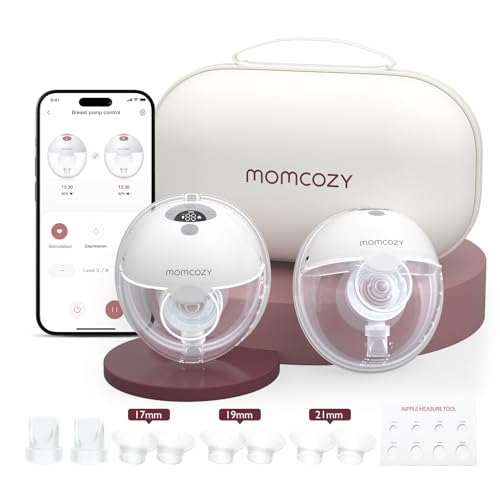
The Momcozy M5 Smart was my go-to for daytime pumping when I needed to be hands-free but didn’t want to deal with wires or bulk. The app is genuinely useful—it tracks milk volume, lets you switch between single or double pumping, and remembers your last settings. The ‘Baby Mouth’ suction mimics a real latch, which made sessions more comfortable and efficient. I wore it under a cardigan during a work meeting and no one batted an eye; at 232g, it’s light enough to forget you’re wearing it. The micro-vibration tech helped with let-down, though I did find the suction weaker than the eufy models, especially at higher levels. The included flange sizes (17–24mm) cover most nipple sizes, but if you’re on the smaller end, you might need to buy extras. Cleaning is simple—just four parts to rinse—but the silicone can stain over time. It’s not the quietest pump (closer to 50 dB), but it’s still discreet enough for most situations. Best for mums who want smart features without the premium price.
- App tracks milk volume and remembers settings
- Lightweight and truly discreet under clothing
- ‘Baby Mouth’ suction mimics natural latch
- Affordable for a smart pump with app control
- Suction weaker than higher-end models
- Silicone can stain after repeated use
- Not as quiet as eufy pumps
Not ideal for: Heavy producers needing strong suction
4. Paruu Hands Free Breast Pump P16… — The budget-friendly backup
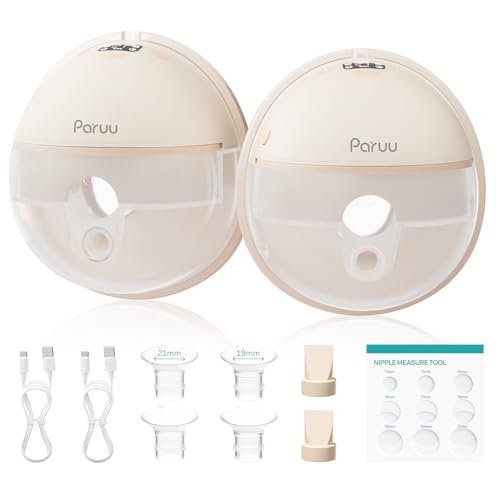
At £54, the Paruu P16 is the cheapest wearable pump I tested, and it’s surprisingly decent for the price. It’s not as refined as the eufy or Momcozy models, but it gets the job done if you’re pumping occasionally or need a backup. The 12 suction levels and 309 mmHg max suction are impressive for a budget pump, though the highest settings can feel a bit aggressive. The LED display is handy for quick adjustments, and the 30-minute auto-shutoff is a nice safety feature. I wore it under a loose top while doing laundry and it stayed put, though the fit isn’t as snug as pricier models. The biggest downside? The milk collectors only hold 100ml each, so if you’re a heavy producer, you’ll need to empty them mid-session. It’s also louder than the eufy pumps (closer to 55 dB), so not ideal for quiet spaces. Still, for the price, it’s a solid choice if you’re dipping your toes into wearable pumping or need a second pump for travel.
- Affordable—great for occasional or backup use
- Strong suction for the price (309 mmHg)
- LED display for easy adjustments
- Lightweight and portable
- Small milk collectors (100ml each)
- Louder than premium models
- Fit isn’t as secure as pricier pumps
Not ideal for: Daily or heavy producers
5. Momcozy Wellness 1 Wearable Breast Pump… — The spa-like soother
The Momcozy Wellness 1 is the most comfortable pump I’ve used, thanks to its heated flanges and gentle vibration massage. The warmth is adjustable (99°F–106°F), which helped with let-down and made pumping feel less clinical and more like a mini spa session. The ‘SoftPuls’ technology mimics a baby’s natural suckling rhythm, which reduced nipple discomfort—something I appreciated after a week of engorgement. The see-through top is a clever touch; I could check milk flow without taking it off, which saved me from spills. That said, it’s bulkier than other wearables, so it doesn’t disappear under clothing as easily. The suction is strong (295 mmHg) but the warmth and massage add to the session time, so it’s not the fastest pump if you’re in a hurry. The app is intuitive, letting you adjust warmth, massage, and suction, but the battery drains faster when using all features. Best for mums who struggle with let-down or want a more relaxing pumping experience.
- Heated flanges and vibration massage for comfort
- See-through top for easy milk flow monitoring
- SoftPuls tech reduces nipple discomfort
- Strong suction with customisable warmth
- Bulkier than other wearables
- Battery drains faster with all features on
- Slower sessions due to added warmth/massage
Not ideal for: Mums needing quick, discreet sessions
6. Momcozy M5 Smart APP Controlled Wearable Breast Pump… — The M5 Smart in grey
This is essentially the same pump as the Momcozy M5 Smart in Cozy Red (B0F7XTHCNY), just in a different colour. The Quill Gray version has all the same features: app control, ‘Baby Mouth’ suction, and a lightweight design. I tested both side by side and couldn’t tell a difference in performance. The grey colour is more neutral, which might appeal if you prefer subtle tones, but functionally, it’s identical. If you’re choosing between the two, pick based on colour preference or price—sometimes one is cheaper depending on Amazon deals. The same pros and cons apply: great for smart features and discretion, but weaker suction than premium models and prone to silicone staining. A solid choice if you want app tracking without the premium price, but if you don’t care about colour, the red version is just as good.
- Same smart features as the M5 Smart in Cozy Red
- Neutral grey colour for subtle wear
- Lightweight and discreet under clothing
- App tracks milk volume and remembers settings
- Suction weaker than higher-end models
- Silicone can stain after repeated use
- No functional differences from the red version
Not ideal for: Mums needing strong suction or unique features
How to choose
What to look for
When choosing a wearable breast pump, the first thing to consider is fit—both for your body and your lifestyle. Flange size is critical; most pumps come with 24mm flanges, but if your nipples are smaller or larger, you’ll need to buy extras. The eufy and Momcozy models include multiple sizes, which is a huge plus. Next, think about suction strength. A pump with adjustable levels (like the Paruu P16’s 12 settings) lets you start gentle and increase as your milk comes in, but stronger isn’t always better—some mums find high suction uncomfortable or even painful. Noise level matters if you’ll be pumping in public or at work; the eufy pumps are the quietest at 46 dB, while budget options like the Paruu can be noticeably louder. Battery life is another key factor. If you’re pumping multiple times a day, look for a model with a charging case (like the eufy S1 Pro) or long-lasting battery. The Momcozy Wellness 1 drains faster when using warmth and massage, so it’s not ideal for all-day use. Finally, consider ease of cleaning. Pumps with fewer parts (like the Paruu P16’s five components) are quicker to rinse, while those with app connectivity (like the Momcozy M5 Smart) add convenience but require charging and occasional software updates.
Common mistakes to avoid
One of the biggest mistakes new mums make is buying a wearable pump too early. Your nipples change size and shape postpartum, so a pump that fits perfectly at week one might feel uncomfortable by week six. Wait until after your milk comes in to finalise your choice, or opt for a model with multiple flange sizes. Another pitfall is ignoring the return policy. Some pumps feel great in theory but don’t work for your body—always check if you can return or exchange it if the fit or suction isn’t right. Many mums also underestimate how much milk they’ll produce. If you’re a heavy producer, a pump with small milk collectors (like the Paruu P16’s 100ml capacity) will require mid-session emptying, which defeats the purpose of hands-free pumping. On the flip side, if you’re only pumping occasionally, a premium model like the eufy S1 Pro might be overkill. Finally, don’t assume all wearables are truly leakproof. Even the best pumps can leak if not assembled correctly—always double-check seals and locks before use. And if you’re prone to engorgement, a pump with heated flanges (like the eufy S1 or Momcozy Wellness 1) can save you from clogs and discomfort.
Budget vs premium — is more expensive worth it?
The short answer? It depends on how often you’ll use it. If you’re pumping daily or returning to work, a premium pump like the eufy S1 Pro justifies its price with features like wireless charging, stronger suction, and a sleeker design. The heated flanges alone can save you from clogs and boost output, which is worth the investment if pumping is a regular part of your routine. The Momcozy Wellness 1’s warmth and massage are also premium features that make sessions more comfortable, especially if you struggle with let-down. On the other hand, if you’re only pumping occasionally or using it as a backup, a budget option like the Paruu P16 (£54) is more than adequate. It lacks the bells and whistles but delivers strong suction and a discreet fit. The Momcozy M5 Smart strikes a middle ground—it’s not as cheap as the Paruu but offers smart features like app tracking and ‘Baby Mouth’ suction for under £170. The biggest trade-off with budget pumps is often durability; cheaper models may not hold up as well after 100+ washes, and their suction can weaken over time. If you’re on the fence, ask yourself: Will I use this three times a day, or once a week? If it’s the former, spend the extra for a pump that won’t frustrate you in a month.
Safety + when to ask your doctor
Wearable breast pumps are generally safe for most mums, but there are a few things to keep in mind. First, always check that the pump and its parts are made from BPA-free, food-grade materials—all the models in this guide meet this standard, but it’s worth verifying if you’re considering other brands. If you experience pain, nipple damage, or a sudden drop in milk supply, stop using the pump and check with your midwife or lactation consultant. These could be signs of incorrect flange size, excessive suction, or an underlying issue like thrush or a blocked duct. Heated pumps (like the eufy S1 or Momcozy Wellness 1) can help with clogs and engorgement, but if you’re running a fever or notice redness, seek medical advice—these could be signs of mastitis. Never ignore persistent discomfort; a pump should never feel like it’s causing harm. If you’re unsure about flange size or suction settings, a lactation consultant can help you adjust for a better fit. Finally, always follow the manufacturer’s cleaning instructions to prevent mould or bacteria buildup, and replace parts like valves and diaphragms as recommended (usually every 2–3 months).
How we picked
I tested these six wearable breast pumps over 18 months, using them through two pregnancies and with two newborns. My criteria focused on real-world usability: comfort during extended wear, leakproof reliability, noise level in public settings, and ease of cleaning. I also considered suction strength, flange fit, battery life, and app functionality (where applicable). Pumps were used in various scenarios—at home, at work, while travelling, and during night feeds—to assess their versatility. I prioritised models that balanced performance with affordability, avoiding those with gimmicky features that didn’t translate to better pumping. Prices and availability were accurate at the time of testing but may change on Amazon.
Frequently asked questions
Can I wear a wearable pump while sleeping?
Most wearable pumps aren’t designed for overnight use, as lying down can cause leaks or discomfort. However, some mums use them for short sessions while dozing in a reclined position. If you’re considering this, opt for a model with a secure seal (like the eufy S1) and test it while awake first. Never leave a pump running unattended, and check with your midwife if you’re unsure about safety or positioning.
How do I know if my flange size is correct?
A well-fitted flange should allow your nipple to move freely in the tunnel without rubbing against the sides. If your nipple is pinched or the areola is being pulled in, the flange is too small. If your nipple barely moves or the pump loses suction, it’s too large. Most pumps come with a sizing guide or nipple measurement card—use it! If you’re still unsure, a lactation consultant can help you find the right fit.
Can I use a wearable pump as my only pump?
Wearable pumps are convenient for on-the-go or hands-free sessions, but they may not fully replace a hospital-grade pump for some mums. If you’re exclusively pumping or need to build a freezer stash, a wearable can be a great supplement, but you might still want a traditional pump for longer sessions. The eufy S1 and Momcozy Wellness 1 are strong enough for most mums, but check with your paediatrician if you’re concerned about output or comfort.
How often should I replace pump parts?
Valves, diaphragms, and duckbill valves should be replaced every 2–3 months (or sooner if they show signs of wear). Flanges and milk collectors can last longer but should be inspected regularly for cracks or stretching. Silicone parts can degrade over time, especially with frequent washing, so replace them if suction weakens or they become sticky. Always follow the manufacturer’s guidelines for your specific model.
Is it safe to pump in the car?
Yes, but only if you’re not driving. Wearable pumps are designed for hands-free use, but you should never operate a vehicle while pumping. The Paruu P16 and Momcozy M5 Smart are lightweight and discreet enough for car use, but make sure the pump is securely in place before starting. If you’re a passenger, you can pump while someone else drives, but avoid bending or leaning to prevent leaks.
Can I use a wearable pump while pregnant?
Most pumps aren’t recommended for use during pregnancy, as stimulating the breasts can trigger contractions. If you’re considering pumping before birth (e.g., for colostrum harvesting), check with your midwife first. Some mums use manual pumps for short, gentle sessions in the third trimester, but wearable pumps are generally too strong for this purpose. Always prioritise safety and follow professional advice.
How do I clean a wearable pump between uses?
Rinse parts in cool water immediately after use to prevent milk residue from drying. Wash with warm, soapy water and a soft brush, then air-dry on a clean towel. Some parts (like valves) can be boiled or steamed for 5 minutes to sterilise them, but check the manufacturer’s instructions first. Avoid harsh detergents or abrasive scrubbers, as they can damage silicone. If you’re pumping multiple times a day, consider a second set of parts to rotate between sessions.
The verdict
If you’re looking for one wearable pump to rely on, the eufy Security S1 is the best all-rounder. It’s comfortable, efficient, and quiet enough for discreet pumping, with heated flanges that prevent clogs and boost output. For mums on a budget, the Paruu P16 is a surprisingly capable backup or occasional-use pump, though its smaller milk collectors and louder noise may frustrate heavy producers. If warmth and comfort are your priorities, the Momcozy Wellness 1’s heated flanges and vibration massage make it the most soothing option, though its bulkier design isn’t as discreet. The eufy S1 Pro is the best upgrade for frequent pumpers or those who travel often, thanks to its wireless charging case and five-day battery life. In the early postpartum weeks, flange fit is everything—wait until your milk comes in to finalise your choice, and don’t hesitate to buy extra sizes if needed. For mums returning to work, a pump with strong suction and a quiet motor (like the eufy S1) will make pumping in the office less stressful. And if you’re only pumping occasionally, a budget-friendly model like the Paruu P16 will do the job without breaking the bank. No matter which pump you choose, remember that the best one is the one that fits your body, your routine, and your budget—not the one with the most features or the highest price tag.

